

Setting the Stage: Kettles, Cauldrons, and Cups
“I’m a coffee junky but even I can only drink so much. I love that teas have way more options and even medicinal purposes. How do I brew and prepare various types so I don’t feel like I’m drinking fragrant bubble bath water?”
CONTROLLED EXTRACTION: BUILDING THE PERFECT CUP
You can buy the most expensive, hand-picked Oolong in the world, the most flavorful tisane, but if you cram them into a tiny metal ball and drown them in microwaved tap water, you’ve wasted your money. Today in Tea School, let’s talk about how to transform water and fire into something wonderful!
In the US, tea is often treated as an afterthought—a quick cuppa; a bag tossed into a mug of hot water. Approaching your tea experience this way is like driving through Glacier National Park at eighty with blinders on. If you want to really unlock the flavor profile of your tea leaves, you have to slow down and control the variables: water temperature, steeping time, leaf-to-water ratio, and water quality.
Controlling the variables begins with water temperature. You wouldn’t bake a soufflé without a thermometer, yet we often expect that perfect cup of tea from a rolling boil. Tea isn’t a one-size, one-step process. To get the precision required for your high-end leaves, we need to first look at our heating source.
If you can’t control the heat, you lose control of the tea. Heat provides the energy required to “wake up” the leaves and coax the flavor from their dried state. However, not all fires are created equal. Depending on your level of craft, you might choose a tool of precision or a tool of tradition—but there is one path you must avoid at all costs.
In the alchemy of tea, the kettle serves two distinct purposes: it’s your heat source (the engine) and your delivery system (the steering). To master the brew, you must understand both.
There’s a certain artistry in mastering the classic, standard stovetop. To use a traditional kettle effectively, you must learn to “read” the water with your senses rather than relying on a digital screen. This requires a level of mindfulness known to ancient tea masters as listening for the “Soughing of the Pines”; that specific, low-frequency hum that occurs when the first small bubbles begin to rise, usually between 175-185°F.
This is your auditory alert for delicate green and white teas. If the kettle is already screaming, you’re too late for those light leaves—that level of violent energy is reserved for robust blacks and tisanes which need that kind of heat to penetrate their dense, oxidized structures or fibrous skins (like roots and bark). But don’t panic if you do reach a ‘screaming kettle’ by accident; just open the lid and wait about two minutes for the water to cool back down to that 185°F sweet spot.
Brewing a really good cup of tea isn’t just about getting the water hot; there’s the physics of how that water hits the leaves. If you’re ready to take your tea studies seriously, the Gooseneck kettle is the gold standard because it masters the physics of delivery through thermal stability and laminar flow.
Unlike standard kettles that dump water indiscriminately, the gooseneck allows for a concentric, precision pour that hydrates every leaf without “dry pockets” or thermal shock. You can find this surgical precision in two formats:
-
The Electric Gooseneck: The “set and forget” principal. This offers to-the-degree digital control and will hold your water at the exact temperature for an hour—perfect for multiple steeps through a long morning.
-
The Stovetop Gooseneck: For the alchemist who wants the ritual of the flame, and the control of the “S-curve” spout. Many of these now come with a thermometer built into the lid so you get the best of both worlds—tradition and science.
However, most of us aren’t starting with surgical tools; we’re starting with what’s already in our kitchen, the most common engine in the American home: The classic kettle. By contrast, the standard stovetop kettle we all grew up with is built for volume, not finesse. Its wide, blunt spout creates a heavy, turbulent stream that “beats the crap” out of the leaves. Think of it as a sledgehammer: it’s perfectly suited for a sturdy breakfast tea or a hearty herbal tisane where high-energy extraction is the goal. However, as stated above, for delicate whites and greens, that heavy stream is too much of an attack, making the leaves release their bitterness out of self-defense.
Knowing how to handle the “sledgehammer” or the “scalpel” is part of the craft—but then there’s one tool in your kitchen that must be avoided in your tea-making journey at all costs—the microwave.
In the world of controlled extraction, the microwave is a black hole for flavor. A kettle relies on convection—the natural upward flow of hot water that ensures a uniform temperature—but a microwave uses volumetric heating, bombarding water molecules from all sides. Without that natural circulation, the water can’t ‘breathe.’ It lacks the dissolved oxygen needed to carry the tea’s delicate notes to your palate.
For these lighter leaves, flavor depends on Atmospheric Harmony: catching the water at its oxygen-rich peak of 175–185°F. In a microwave, your water becomes stratified; while the top of your mug is scalding, the bottom remains lukewarm. When you drop your leaves into this chaotic mess, you 'shock' them. The top leaves scorch, instantly releasing bitter tannins, but the leaves at the bottom fail to unfurl or release their aromatics. This ‘shocked’ leaf results in a scientifically flat, lackluster cup of tea.
Once that perfectly heated water leaves the spout, its job is to extract flavor—and it can only do that if it can actually reach the surface of the leaves. This is where your choice of hardware becomes critical. There is a golden rule of steeping and extraction: Room to Bloom.
High-quality tea leaves are often tightly rolled and dried, and as they hydrate, they can expand to three or four times their original size. If you confine your tea leaves in a classic metal tea ball, you’ve essentially built them prison. The incarcerated leaves crush against one another, water can’t circulate through them, and the flavor basically remains trapped.
But even in the roomiest vessel, the transformation isn’t instantaneous. Once you’ve mastered the heat, you have to master the hold. Steeping time is the difference between a sweet, nuanced cup and a bitter, astringent disaster. Think of hot water as a solvent. The moment it hits the leaf, it begins pulling out compounds in a specific order: first the aromatics (the smell), then the sugars (the sweetness), and finally the tannins and polyphenols (the structure and bitterness). If you leave the leaves in too long, the tannins overstay their welcome and become that over-dramatic guest.
Because every leaf has a different cellular density, they each have a different social battery. You have to know when to show them the door before the conversation turns from “sweet and floral” to “unpleasant and resentful”.
Keeping with the analogy, think of your brew this way:
THE GUEST LIST: CURFEWS & CLIMATES
-
White & Green Teas (The Introverts): 175–185°F for 1–2 Minutes. These guests have very short social batteries. They prefer a quiet, gentle environment. However, if you don’t show them the door by minute three, they’ll turn bitter and ruin the vibe of the whole party.
-
Oolongs (The Socialites): 185–205°F for 3–5 Minutes. These guys can be intense; they can take the heat, but they need a few minutes to get comfortable and really open up—that’s when they share their best stories! But don’t let them linger into minute six; that’s when they start getting abrasive.
-
Black Teas & hearty tisanes (The Professionals): 205–212°F for 3–5 Minutes. These can handle the stress of a screaming kettle. They require this high-energy, boiling environment to break through their dense, oxidized structures and deliver that robust body you’re looking for.
-
Grasses, Soft Herbs & Flowers (The Flower Children): 190–200°F for 3–5 Minutes. Think peace, love, and kumbaya—chamomile, lavender, mint, catnip, etc. These are the lighthearted ones who surrender their essential oils almost instantly. Don’t scorch them with a rolling boil, or the petals will shock, leaving you with that "soapy" bubble bath flavor.
-
Fruit-Forward Blends (The Diva): 200–212°F for 5 minutes sharp. Watch out for the guests with the most attitude—anything heavy in hibiscus, cranberry, or citrus peel. They’ll turn your water a deep, witchy crimson in seconds, but don’t let the bold colors fool you. They’re packed with organic acids, and if you treat a “Diva” like a “Ride-or-Die” by over-steeping, that refreshing zing will turn into an aggressively sour, metallic scowl.
-
Roots & Barks (The Ride-or-Dies): 212°F (Boiling) for 7–10+ Minutes. Now, these are your stalwart guests. They are committed. Because they’re dense and fibrous (like ginger root or cinnamon bark), they aren’t easily offended by heat. They need a long, deep soak to finally surrender their secrets.
The Golden Rule: You can always steep a tea longer if it’s too weak, but once you’ve over-steeped it, there’s no going back. But even with the perfect timing, these guests need room to mingle. If you cram a ‘Socialite’ or a ‘Diva’ into a tiny, restricted space, they’ll suffocate before they can express themselves.
To truly unlock the profile of any tea, you must consider the vessel in which you pour tea. Whether you choose a traditional Chinese Gaiwan (a 'lidded bowl' built for focus), a Japanese Kyusu (a teapot designed specifically for the delicate needs of green tea), or a modern basket strainer, the goal is the same: freedom of movement.
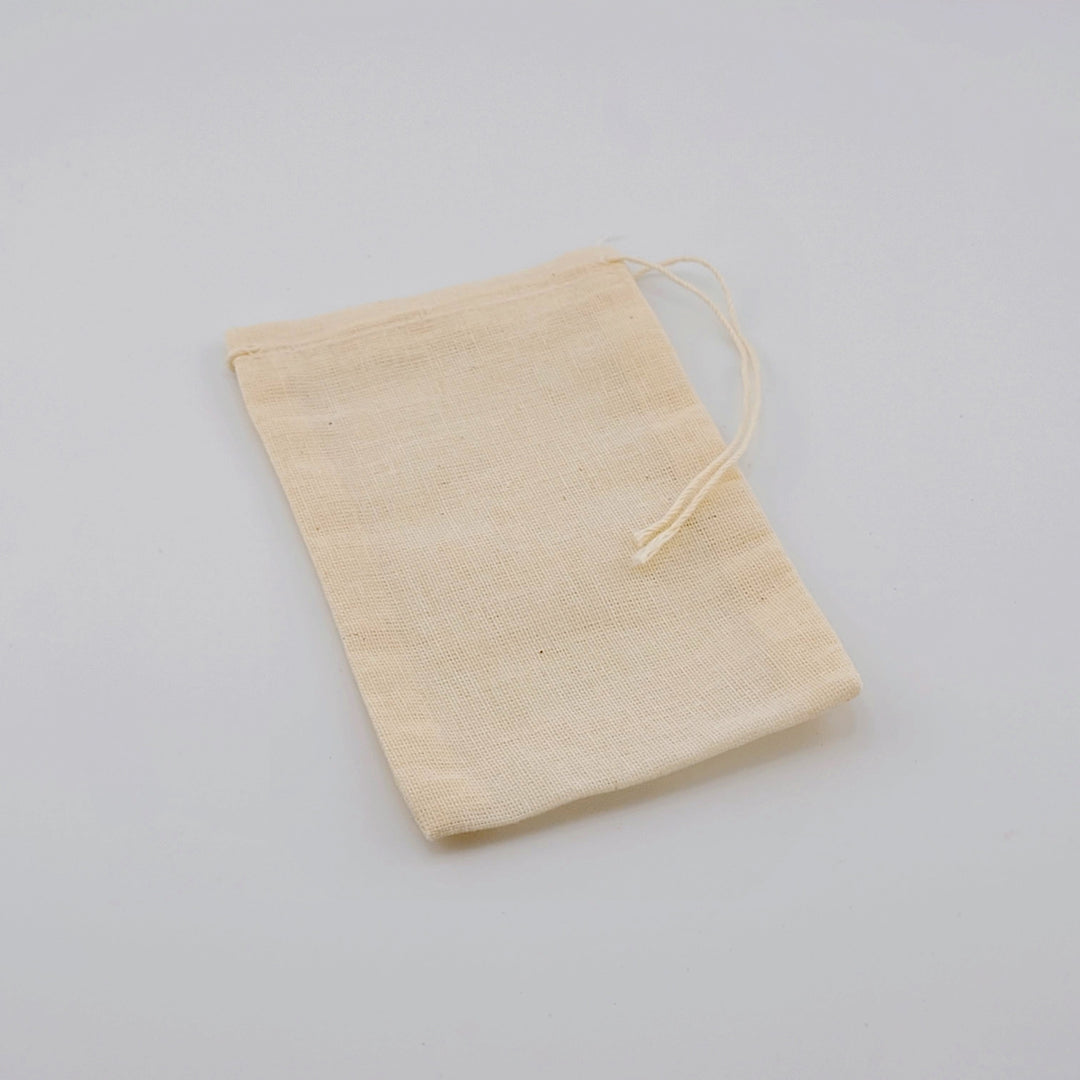
Whether you prefer a precision metal mesh or a non-bleached paper filter, the golden rule remains: space is the catalyst for transformation. For the alchemy to happen, the leaves must be allowed to unfurl, swell, and dance. If you cram them into a tiny tea ball, the water can’t reach the center of the leaves. Witches Brew recommends a more sustainable touch: reusable organic cotton muslin bags. Unlike the incarceration of a small metal tea ball, our large muslin bag allows for significant expansion.
Don’t get me started on plasticized boxed tea-bags from the market…
Now that you’ve brewed your tea, you’re going to need something from which to drink it, something that can preserve its heat and protect its character. The cup or mug you choose is your tea’s final important decision. Ceramic or porcelain are neutral standards; they retain heat and are nonporous, leaving their echoes of beverages-past from revisiting; be wary of plastic or travel tumblers which are notorious for this.
It’s very easy to become distracted by the shiny. Avoid expensive gadgets that are more theater than substance. Automatic Tea Makers, plastic infuser tumblers, electric warming coasters, decorative mesh balls, fancy tea timers are unnecessary. Does one really need the tea-equivalent to a $500 gold-plated cocktail shaker? Ultimately, all it truly requires for a high-quality tea experience is the precision of controlled heat, a pure water source, and a clean environment where the water can move and the leaf can breathe.
So, how do you stop drinking 'fragrant bubble bath water' and start drinking really good tea? Control. That soapy, flat, or overly perfumed taste isn’t the fault of the tea—it’s the result of 'shocking' the leaves with microwave radiation or suffocating them in a tiny metal ball. When you master the precision of controlled heat and give the leaves room to breathe, the soapiness vanishes, and the tea’s true soul finally steps into the light.
WEEK 2 ASSIGNMENT: THE VESSEL AUDIT
This week, I want you to perform an “Experiment in Liberation” to see—and taste—the difference for yourself.
-
The Visualization: Take your current infuser (your tea ball, small basket, or muslin bag) and place a tablespoon of dry tea inside.
-
The Physics: Imagine those leaves expanding to three or four times their original size. Look at the remaining space. Will the leaves have a chance to breathe, or are they crammed in there like a packed subway?
-
The Liberation: If your leaves are cramped, you’ve got to find a larger vessel. If you don’t have a wide basket strainer, use a simple kitchen sieve or a large glass mason jar (straining the tea into your mug after it steeps). The reusable organic cotton muslin tea bags from Witches Brew are a sustainable suggestion.
-
The Observation: Notice the difference in the “clarity” and sweetness in your cup. Does the tea finally taste like a nuanced plant rather than a floral perfume?
The Goal: Find one specific flavor note—a hint of stone fruit, a touch of honey, or a grassy earthiness—that was previously hidden under your previous experiences.
Happy Brewing!
© Dani Clifton/Witches Brew
Image by T.C/Witches Brew


Leave a comment